
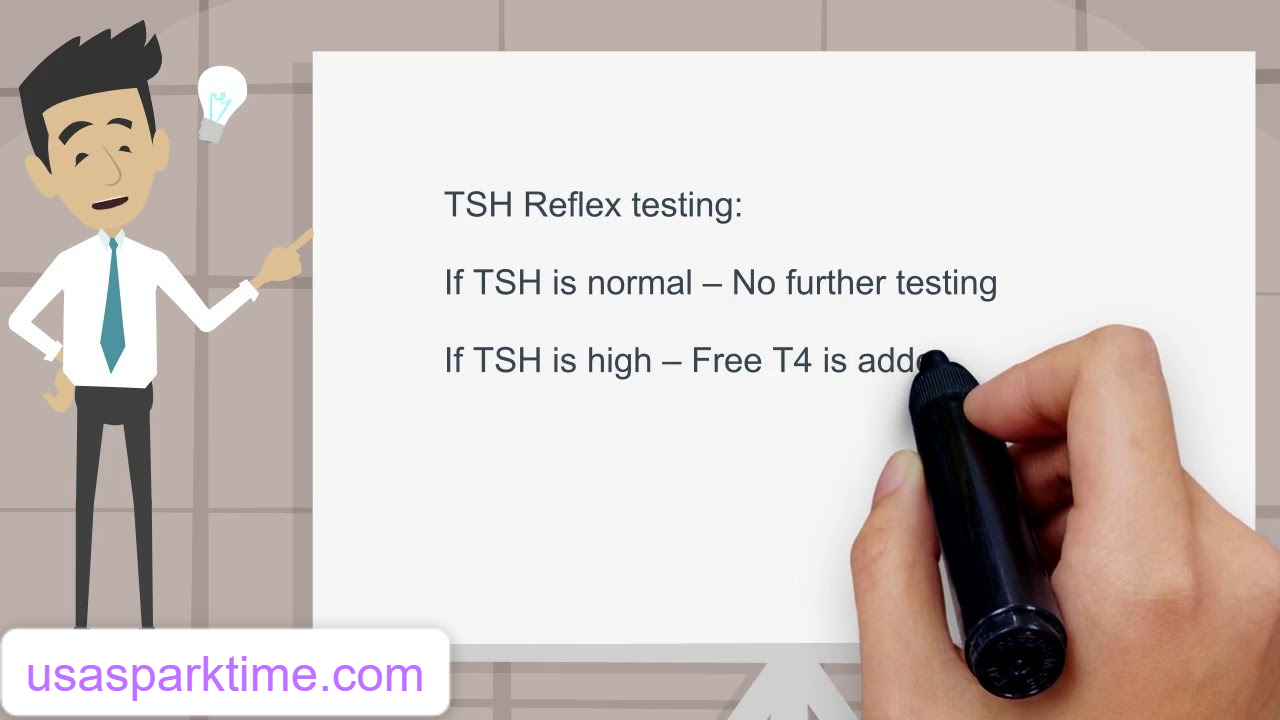
“TSH with Reflex to Free T4” is a lab testing approach where a thyroid-stimulating hormone (TSH) test is performed first. If results are abnormal, the lab automatically measures Free T4 to give a clearer picture of thyroid function. This reflex testing saves time, prevents unnecessary tests, and helps doctors quickly identify hypo- or hyperthyroidism, making diagnosis more efficient and accurate.
Understanding thyroid function is essential for maintaining overall health, and TSH with Reflex to Free T4 testing is a key tool in this process. This approach measures TSH first and automatically checks Free T4 if needed, allowing clinicians to identify thyroid disorders efficiently. Reflex testing improves diagnostic accuracy while reducing unnecessary testing, helping patients receive timely treatment. In this guide, we explain physiology, interpretation, clinical scenarios, normal ranges, and how modern AI and data tools support these tests for more informed healthcare decisions.
Understanding TSH and Free T4: A Beginner’s Guide
The thyroid is a small, butterfly-shaped gland in the neck that regulates metabolism through hormones. TSH (Thyroid-Stimulating Hormone) is produced by the pituitary gland and signals the thyroid to release T4 and T3 hormones. Free T4 represents the active, unbound form of T4 circulating in the blood. Measuring TSH gives an initial indication of thyroid function, and when paired with Free T4 through reflex testing, it helps clinicians quickly understand whether the thyroid is overactive, underactive, or functioning normally.
What “TSH with Reflex to Free T4” Actually Means
When a doctor orders TSH with Reflex to Free T4, the lab first checks TSH levels. If TSH is outside the normal range, the lab automatically measures Free T4. This reflex approach ensures accurate diagnosis without ordering multiple separate tests. For example, a high TSH may suggest hypothyroidism, and measuring Free T4 confirms the severity. Conversely, a low TSH may indicate hyperthyroidism. Reflex testing reduces delays, unnecessary blood draws, and costs, making thyroid monitoring efficient for both patients and healthcare providers.
How TSH and Free T4 Work Together in Thyroid Regulation
TSH and Free T4 function as a feedback loop. Low thyroid hormone levels trigger higher TSH production to stimulate hormone release. High thyroid hormone levels suppress TSH to maintain balance. Measuring TSH alone provides a general signal, while Free T4 measurement confirms hormone activity. Reflex testing captures this interaction accurately, allowing early detection of subclinical thyroid disorders. In adolescents and adults, this testing is vital because thyroid imbalances can affect growth, metabolism, mood, and energy levels, and proper interpretation ensures effective management.
Why Reflex Testing Saves Time and Improves Accuracy
Reflex testing minimizes delays in diagnosis. Instead of waiting for separate lab orders, abnormal TSH automatically triggers Free T4 measurement. This approach is especially useful in primary care and endocrinology. Studies show that reflex testing reduces unnecessary clinic visits and prevents incomplete evaluations, allowing timely treatment initiation. Patients benefit from fewer blood draws, faster results, and clearer guidance on treatment decisions. For physicians, reflex testing streamlines workflow and ensures laboratory resources are used efficiently.
Normal vs. Abnormal TSH with Reflex to Free T4 Values
Normal TSH typically ranges from 0.4–4.0 mIU/L, and Free T4 from 0.8–1.8 ng/dL, though ranges may vary by lab. High TSH with low Free T4 indicates primary hypothyroidism, while low TSH with high Free T4 suggests hyperthyroidism. Subclinical conditions occur when TSH is abnormal but Free T4 remains normal. Reflex testing helps identify these subtle patterns. Interpreting these results in the context of symptoms ensures proper clinical decisions, such as monitoring, lifestyle adjustments, or starting medication.
Also read this :Tahini Unveiled: Ancient Nutty Middle Eastern Paste Secrets Revealed
Common Patterns in TSH and Free T4 Results Explained
Several patterns emerge in reflex testing:
- High TSH + Low Free T4: Primary hypothyroidism.
- Low TSH + High Free T4: Hyperthyroidism.
- High TSH + Normal Free T4: Subclinical hypothyroidism.
- Low TSH + Normal Free T4: Subclinical hyperthyroidism.
These patterns help physicians decide on further testing, treatment, and follow-up schedules. Reflex testing captures these trends early, improving patient outcomes and reducing the risk of complications such as cardiovascular problems or growth delays in teenagers.
When Reflex Testing May Not Be Enough
Although reflex testing is efficient, it has limitations. Central hypothyroidism, rare pituitary disorders, and acute illness may require both TSH and Free T4 measurement simultaneously. Medications like steroids, biotin, or thyroid hormone therapy can affect results. Clinicians must interpret results alongside symptoms and other lab tests. Reflex testing is a first step, but understanding exceptions ensures accurate diagnosis and prevents mismanagement
TSH with Reflex to Free T4 in Hypothyroidism and Hyperthyroidism
Hypothyroidism, caused by low thyroid hormone production, often presents with fatigue, weight gain, and cold intolerance. Hyperthyroidism, caused by excessive hormone production, may cause rapid heartbeat, weight loss, and anxiety. Reflex testing distinguishes between these conditions efficiently. For example, an adolescent with fatigue and high TSH may require Free T4 testing to confirm hypothyroidism, allowing early treatment with thyroid hormone replacement. Conversely, low TSH and high Free T4 indicate hyperthyroidism, prompting evaluation for Graves’ disease or thyroid nodules.
Step-by-Step Guide to Interpreting Reflex Thyroid Tests
- Check TSH levels.
- Identify abnormal results.
- Confirm with Free T4 reflex measurement.
- Compare with normal reference ranges.
- Evaluate patient symptoms and medical history.
- Decide on further testing or treatment.
- Monitor trends over time.
This structured approach ensures accurate diagnosis and avoids unnecessary treatments. Reflex testing simplifies this workflow while providing reliable results for both patients and clinicians.
Clinical Scenarios: Making Sense of Confusing Lab Results
Some patients present with borderline TSH values, fluctuating Free T4, or conflicting symptoms. Reflex testing helps clarify these scenarios. For instance, postpartum thyroiditis may show transient high TSH followed by normal Free T4, while subclinical hypothyroidism can appear with mild TSH elevation. By using reflex testing, doctors can identify these patterns early, provide reassurance, or initiate monitoring, preventing progression and improving quality of life.
Optimal TSH Ranges for Reflex Testing in Adults and Teens
For most adults, TSH 0.4–4.0 mIU/L is normal, but some guidelines suggest narrower ranges for specific populations. Teens and children have slightly higher TSH levels during growth periods. Reflex testing ensures that any deviations trigger Free T4 measurement, reducing missed diagnoses. Tailoring reference ranges to age, sex, and clinical context improves diagnostic accuracy and helps physicians make evidence-based decisions about monitoring and treatment.
Role of AI and Technology in Thyroid Test Interpretation
Modern AI tools can analyze reflex thyroid results alongside patient history, medications, and prior labs. Platforms like PubMed.ai or lab-integrated AI help predict thyroid disease risk, suggest follow-ups, and identify patterns invisible to the human eye. AI-supported reflex testing improves efficiency, reduces errors, and enhances personalized care by integrating large datasets to guide clinical decisions in real-time.
Reflex Testing vs. Standard Thyroid Panels: Pros and Cons
Pros: Faster results, fewer unnecessary tests, lower cost, early detection.
Cons: May miss rare pituitary disorders, limited use in complex cases.
Standard thyroid panels measure TSH and Free T4 together, providing more comprehensive data but increasing cost and lab workload. Reflex testing balances efficiency and accuracy for most patients, making it the preferred method in routine practice.
How Lifestyle and Medications Affect TSH and Free T4 Levels
Certain medications, supplements, and lifestyle factors can influence thyroid tests. For example, biotin supplements can falsely lower TSH readings. Stress, extreme dieting, or chronic illness may transiently alter hormone levels. Reflex testing helps confirm true thyroid dysfunction by measuring Free T4 when TSH is abnormal. Patients should inform clinicians about medications and habits to ensure accurate interpretation.
Quick Reference Table for TSH with Reflex to Free T4 Interpretation
| Pattern | Likely Condition | Clinical Action |
| High TSH + Low Free T4 | Hypothyroidism | Consider thyroid hormone replacement |
| Low TSH + High Free T4 | Hyperthyroidism | Investigate Graves’ or nodules |
| High TSH + Normal Free T4 | Subclinical Hypothyroidism | Monitor or treat if symptomatic |
| Low TSH + Normal Free T4 | Subclinical Hyperthyroidism | Monitor and evaluate risk |
Conclusion & Call-to-Action
TSH with Reflex to Free T4 is a highly efficient, accurate, and patient-friendly approach to thyroid testing. It streamlines diagnosis, captures subtle hormonal imbalances, and helps doctors provide timely care. Understanding the interplay between TSH and Free T4 empowers patients to recognize symptoms early and take informed health decisions. If you suspect thyroid issues or have abnormal results, consult your healthcare provider promptly for interpretation and personalized management.
FAQs: Targeting Long-Tail Keywords
1. What does TSH with Reflex to Free T4 mean for thyroid health?
It measures TSH first, and if abnormal, automatically tests Free T4 to assess thyroid function efficiently.
2. How accurate is TSH with Reflex to Free T4 testing?
Reflex testing is highly accurate for most thyroid disorders but may need additional tests for rare pituitary conditions.
3. Can medications affect TSH with Reflex to Free T4 results?
Yes, biotin, steroids, and thyroid medications can influence readings and should be reported to the doctor.
4. What are normal TSH and Free T4 values in teens?
Normal teen TSH ranges from 0.5–5.0 mIU/L, and Free T4 from 0.9–1.8 ng/dL.
5. Why is reflex testing preferred over standard thyroid panels?
It reduces unnecessary testing, saves time, and quickly identifies abnormal thyroid function.
6. What patterns in TSH and Free T4 suggest hypothyroidism?
High TSH with low Free T4 indicates primary hypothyroidism, while high TSH with normal Free T4 indicates subclinical hypothyroidism.
7. How often should TSH with Reflex to Free T4 be tested?
Frequency depends on age, symptoms, and existing thyroid conditions, usually annually or as recommended by a doctor.
For more info :usasparktime.com
